
Welcome to WhiteAnalyst
WhiteAnalyst - A platform for insightful articles and discussions on current topics, politics, and social issues. Join our community to read, discuss, and share your thoughts.
ARE POLITICAL PARTIES GUIDING YOUTH — OR IGNITING THEM IN THE WRONG DIRECTION?
Political parties like Cockroach Janta Party often claim to represent the aspirations, anger and ambitions of young people. But are they actually helping the youth understand issues, think critically and participate constructively in democracy?
THE WHITE REPORT
Analytical News, Quick Understanding.
Turn your screen time in to Knowledge Time.

Ladakh’s Demand for Greater Autonomy.
The Ministry of Home Affairs has suggested a new system of governance for Ladakh. Under this proposal, an elected local body would be given constitutional recognition through a new Article 371K.Any laws made by this body would need approval from the Lieutenant Governor before they could be implemented.Ladakh’s leaders are not fully satisfied with the proposal because they believe it does not give them enough power to make decisions about local issues.The proposal would continue to allow the Central Government to exercise control over important matters. It is still being discussed and has not been finalised.From the WhiteAnalyst :Power to local people: People in Ladakh want greater involvement in decisions that directly affect their daily lives. More authority for local representatives could help address their needs.Protection of local culture: The people of Ladakh are concerned about protecting their land, jobs, traditions and natural resources.Role of elected representatives: Elections are meaningful when the people they choose have enough power to work on local problems and fulfil their promises.Need for discussion: The Central Government and Ladakh’s representatives should continue talking to find a solution that protects local interests while maintaining effective administration.
4 mins read.
India–China Border Tensions in Arunachal Pradesh.
The head of the Indo-Tibetan Border Police (ITBP), Shatrujeet Kapur, has reported that Indian and Chinese soldiers have faced each other at several places along the Line of Actual Control (LAC) in Arunachal Pradesh.Some of these incidents reportedly took place near Asaphila and Taksing in the Upper Subansiri district.According to the Ministry of External Affairs, tensions can arise when Chinese troops move away from their usual patrolling routes.Reports indicate that there were no violent clashes during the latest incidents. However, the situation shows that disagreements along the border continue to be a concern.From the WhiteAnalyst —National security: India needs to keep a close watch on its borders and ensure that its security forces have the necessary equipment and facilities to protect the country.Relations between India and China: Both countries need to maintain regular communication and hold discussions to prevent small disagreements from turning into serious conflictsUse of modern technology: Drones and systems designed to detect or stop enemy drones can help security forces monitor remote border areas more effectively.Peace in the region: Continued tensions can affect relations between the two countries, including trade and other areas of cooperation.
4 mins read
Global Biodiversity Protection: Countries Falling Behind on Nature Conservation:
Representatives from different countries are meeting in Yerevan, Armenia, for the 17th Conference of the Parties (COP17) to discuss how to protect the environment and prevent the loss of plant and animal species.The meeting is reviewing a global plan adopted in 2022, known as the Kunming-Montreal Global Biodiversity Framework. Its main aim is to stop the destruction of nature and help restore damaged ecosystems by 2030.According to a report discussed before the conference, countries are not making enough progress towards most of the plan’s targets. These include protecting forests and wildlife, reducing pollution, preventing overfishing and providing sufficient money for conservation.One of the plan’s major goals is to protect at least 30% of the world's land and oceans by 2030.From the WhiteAnalyst -Protection of nature: Forests, rivers, wetlands and oceans provide us with clean water, food and fresh air. They also support wildlife and help maintain the balance of nature.Need for financial support: Developing countries often need more money, technology and expert guidance to protect their natural resources effectively.Impact on people's lives: The loss of plants and animals can affect farming, fishing, tourism and the livelihoods of people who depend on nature.International cooperation: Countries need to work together and turn their promises into practical actions. Local communities and Indigenous people should also be involved in decisions about protecting their environment.
4 mins readRussia–Ukraine War: New Efforts to Bring Peace.
Russia and Ukraine have agreed to a temporary ceasefire in the Ukrainian town of Oleshky, which is currently under Russian control. The ceasefire is scheduled to begin on 27 October to help deliver essential supplies and allow civilians to leave the area safely.Ukrainian President Volodymyr Zelenskyy has said that further discussions involving Ukraine, Russia and the United States are planned for the first half of November in Abu Dhabi.These developments indicate that diplomatic efforts are continuing alongside the ongoing conflict. However, a temporary ceasefire does not mean that the war is coming to an end.From the WhiteAnalyst —Helping civilians: A temporary halt in fighting could allow people to receive food, clean water and medical supplies, while giving families an opportunity to move away from dangerous areas.Peace through dialogue: Discussions between the countries could help them identify common ground and explore ways to reduce violence.Challenges to peace: Both sides continue to face major disagreements over occupied territories, Ukraine’s security and future defence arrangements. These issues make a permanent agreement difficult to achieve.Impact on the world economy: The prolonged war has affected energy prices, food supplies, international trade and government spending on defence, with consequences for countries around the world.
5 mins read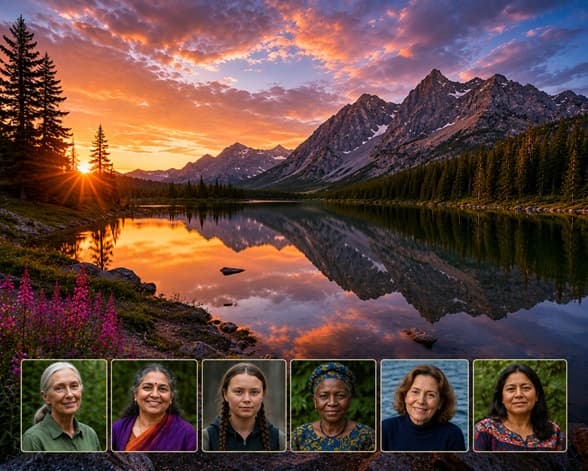
Six Women, One Planet - Stories of Courage Changing the Future of the Earth.
This length of the article is long but we ensure Quality reading and complete information with Analysis.
- The stories of six women challenge the environmental imbalance and presented an impactful change.
- Why are women, especially grassroots women, often at the forefront of environmental movements?
- Why Poor communities, indigenous groups, women, and children often face the harshest consequences?
- What are the significance of such movements?
- What Can India Learn and what Indian societies can do?
"The greatest threat to our planet is the belief that someone else will save it"
Beyond Reading. Into Understanding & Analysis
WhiteAnalyst is redefining the way we read—turning stories into meaningful understanding, deeper analysis, and critical insights.
Governance
Social Issues
World
Political Impacts
How Reading WhiteAnalyst is Beneficial for Children and Students?
Don’t Let Reels Raise Your Child. Let Reading Shape Their Mind.